If you are in your thirties or forties with a job and kids, the diet that works is the one you can still be doing in a year. Not the one that looks best on paper. Most people I coach in Paisley have already tried the hard version, more than once, and it ended the same way every time.
So this is the boring version.
Why the crash diet keeps failing you
A crash diet asks for willpower every day, and willpower is the first thing to go when a kid is up at three in the morning and work is busy. You can white knuckle it for a few weeks. Then a birthday, a bad week or a holiday arrives, the plan has no room for it, and you are back where you started feeling like you failed.
You did not fail. The plan had no way to survive a normal life, and yours is a normal life.
The other problem is what a crash diet does to the person following it. You are hungry and short with people, your training gets worse, and you lose muscle along with the fat. None of that makes the next attempt easier.
Build meals round protein
The single most useful change for most people is getting a decent portion of protein at every meal. Chicken, fish, eggs, Greek yoghurt, lean mince, beans, tofu, whatever you will actually eat. It keeps you fuller for longer, and it helps you hold on to muscle while you lose fat.
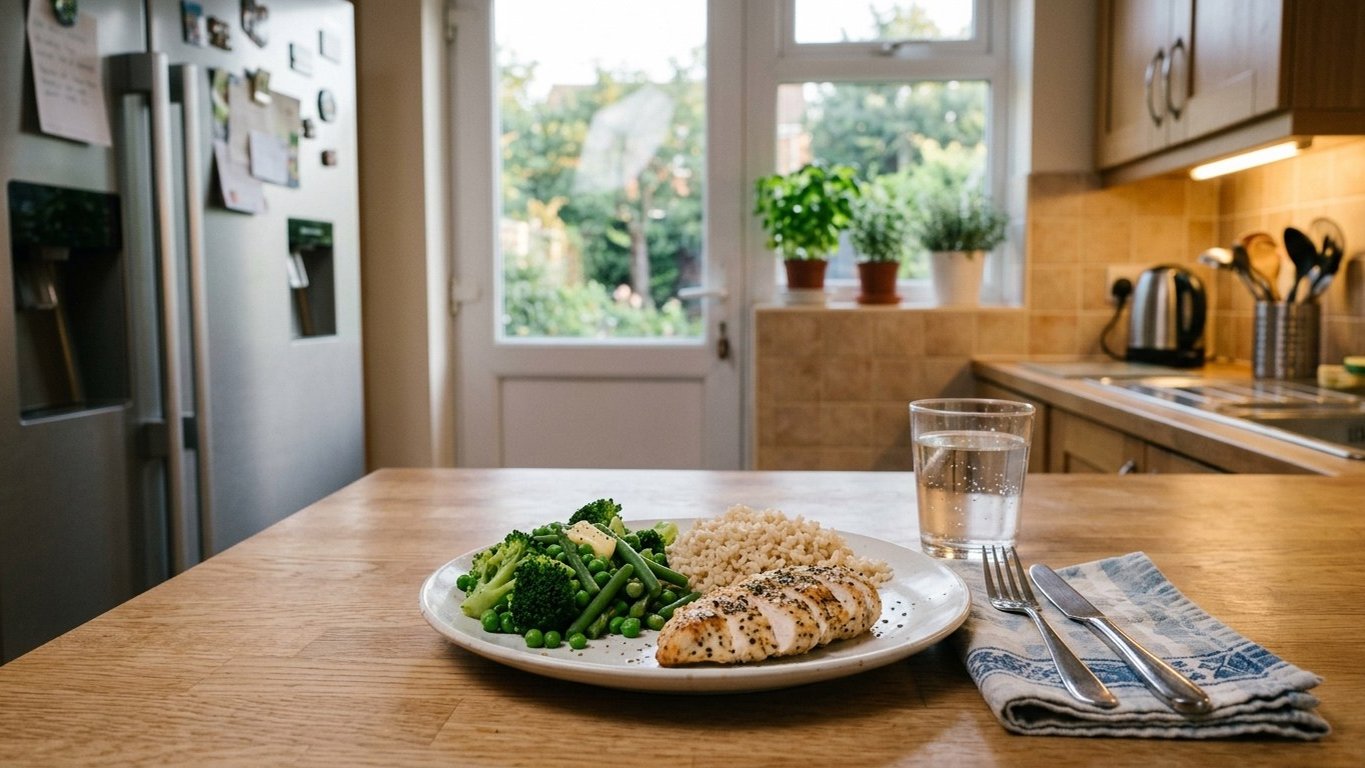
Then keep the meals simple. A protein, some vegetables, something like rice or potatoes, and the same handful of meals on rotation. Nobody with a full time job and two kids needs a new recipe every night. You need four or five dinners you can make half asleep that the rest of the house will eat too.
I am not going to give you a calorie number here. A number off a blog post is a guess about a stranger. If you want a starting point, the NHS has a free weight loss plan and advice on healthier eating that is a sensible place to begin.
Lift weights so you keep the muscle
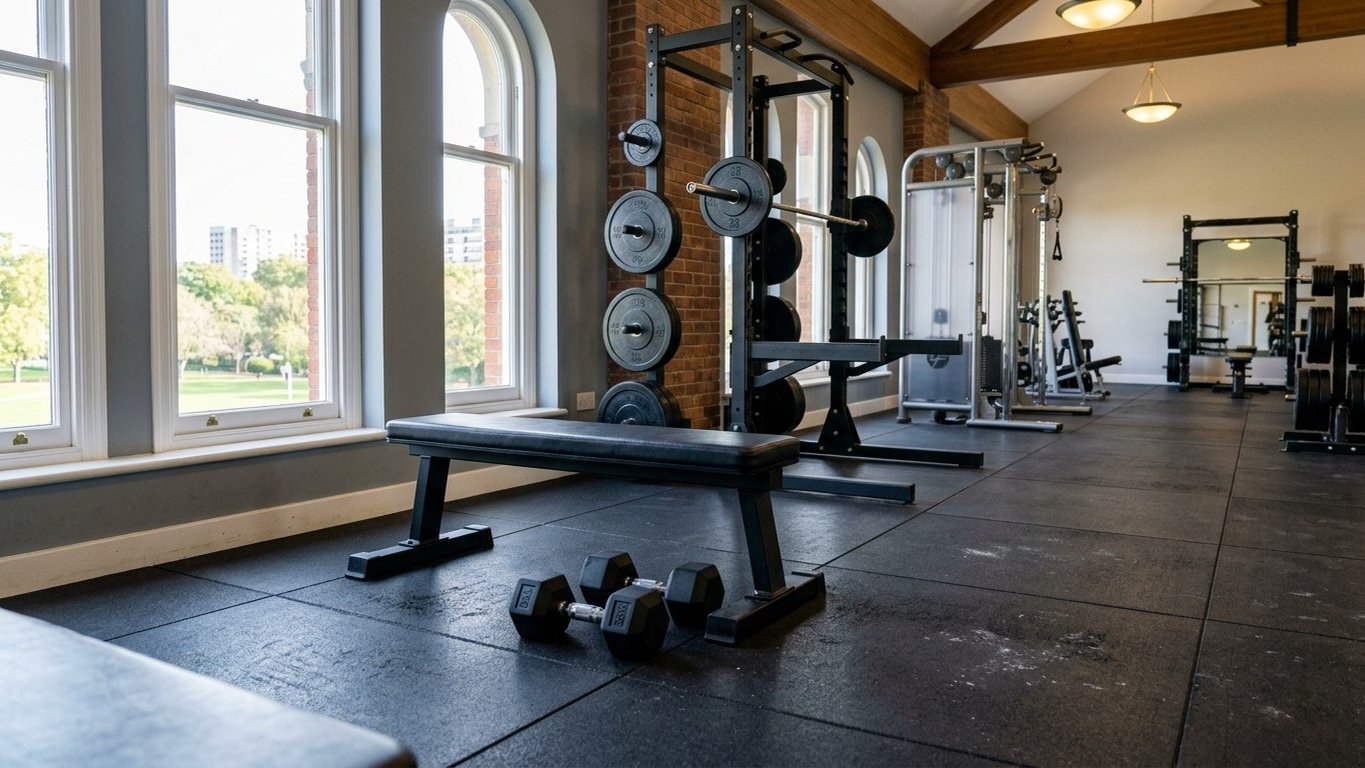
When people want to lose weight, they tend to go straight for cardio. Cardio is fine. But if all you do is eat less and run more, a good chunk of what you lose can be muscle, and muscle is what keeps you strong and makes everyday life easier as you get older.
Strength training tells your body the muscle is still needed. The NHS physical activity guidelines (last reviewed May 2024) say adults should do strengthening work on at least two days a week, alongside at least 150 minutes of moderate activity. Two full body sessions a week is a realistic place to start, and it fits round most jobs.
Walk more than you think you need to
Steps are the most underrated part of this. Walking does not make you hungry the way a hard session can, it does not need recovery, and you can fit it into a day you thought was full. Walk the school run, get off the bus a stop early, take calls on your feet, go round the block after dinner.
It will not feel like exercise. That is the point. It is still there on the weeks training goes out the window.
Sleep is part of the plan
Short sleep makes everything harder. You are hungrier, you reach for the easy food, and the session you had planned for the morning does not happen. The NHS says plainly that not getting enough sleep can make it harder to lose weight.
You cannot always fix sleep with young kids. But you can stop scrolling in bed and stop treating midnight as the only time that is yours. Protect what you can.
Drink at the weekend, just less of it

I am not going to tell you to stop drinking. You probably would not, and a plan that bans the pub on a Saturday is a plan you will quit by November.
What matters is that alcohol carries a lot of calories, it is easy to lose count, and it tends to bring a takeaway and a slow Sunday with it. Have the drinks you actually enjoy, skip the ones you have out of habit, and eat something decent before you go out. That alone changes most weekends.
Why the scale bounces
Your weight will go up and down from one day to the next, and most of it has nothing to do with fat. Water, salt, a big meal, a hard session, a bad night’s sleep and how recently you ate all show up on the scale.
So weigh yourself under the same conditions, a few mornings a week, and look at the trend over a month rather than reacting to one number. A higher reading on a Monday after a weekend away is not a disaster. It is usually water, and it usually settles.
When to speak to your GP first
If you have a medical condition, take regular medication, or have not exercised in a long time, speak to your GP before making big changes to how you eat or train. I am a personal trainer, not a doctor or a dietitian, and some situations need one of them.
Getting help with it in Paisley
None of this is complicated. The hard part is doing it on a week when everything else is going wrong, and that is where most people stall.
If you want a plan built round your job and your family, that is what weight loss coaching in Paisley is for. If the gym side is the gap, have a look at one-to-one personal training in Paisley, and if fitting training into your week is the real problem, read how to train around a nine to five.